prijava
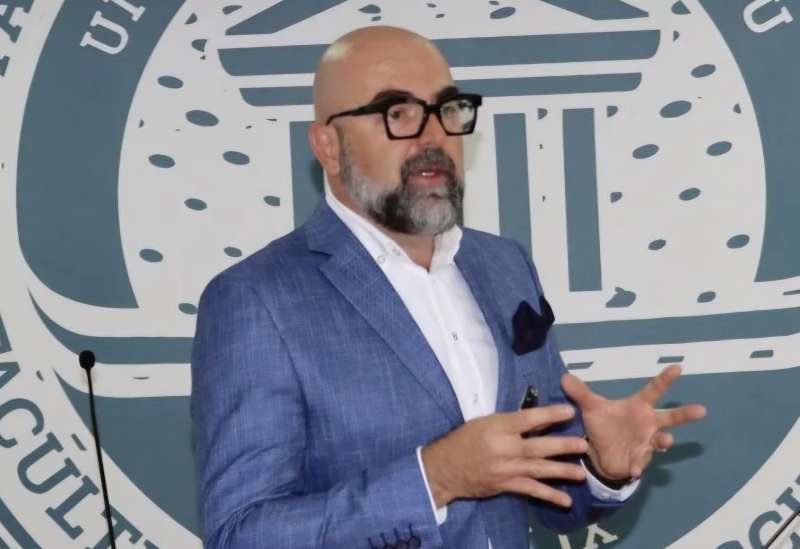
SARAJEVO, October 5 (FENA) – The solution for creating an entirely new image of Bosnia and Herzegovina, according to a communication expert and PR specialist in cultural diplomacy, state branding, and imaging, Assoc. Prof. Dr. Damir Šehanović lies in the foundations of the country’s rich and strong identity.
He emphasizes that messages, primarily developed through culture, art, sport, and tourism, must speak a universal language, which gives them the greatest potential for international visibility.
“Bosnia and Herzegovina had its identity long before the entities were created. Its peoples, its people, its wealth, and the beauty of its diversity are the essence of BiH identity. Research conducted about a decade ago by my colleague Božo Skoko, on a representative sample of all three constituent peoples in BiH, proportionally to the latest census, produced very interesting results.
When asked what could symbolize a new, contemporary identity of Bosnia and Herzegovina, what would come to a foreigner’s mind at the mention of this country, excluding war, and what symbols, characteristics, and advantages its peoples would most like to communicate abroad, the answers were revealing. The first response was the mentality of the people, hospitality, and openness. Second were natural beauties and diversity. The third strength was multiculturalism, the encounter of different religions and cultures.
It is important to note that these answers were chosen almost equally by Bosniaks, Croats, and Serbs in both BiH entities, indicating that despite political and administrative divisions, there is an emotional and cultural common denominator that forms the basis of our identity. This should be the new starting point,” Šehanović told FENA.
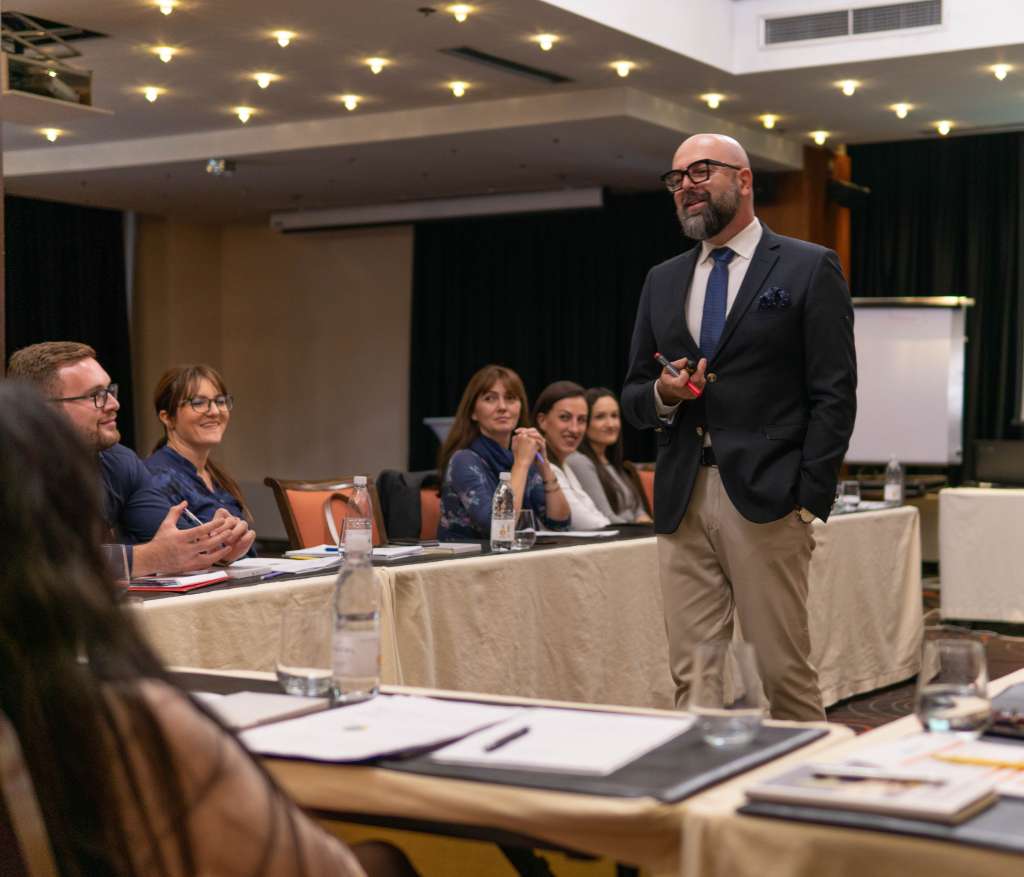
As a panelist, he recently participated in the “Media Innovation and Trends” conference organized by the Federal News Agency in Tuzla. At the conference, Šehanović particularly highlighted the distinction between identity and image. Identity is our personality, uniqueness, what we carry within us, and what is inseparable from us as people, a nation, or a state. Image is how others see us, the picture we consciously or unconsciously create and project to represent our identity.
“My identity remains the same whether I am in shorts and a T-shirt on a bike, in business casual at a conference, or formally dressed at a diplomatic meeting. It is all still me, only perceived differently in the eyes of observers. The same principle applies to cities, states, and brands,” Šehanović explained.
He notes that when developing a strategy, he always starts from identity and then creates the image through its elements, the impression he wants to leave on the client.
“BiH’s identity is complex, versatile, attractive, and beautiful. Unfortunately, the image we project abroad does not always reflect all these elements. It is necessary to strategically design how to package these values into a new, strong image of Bosnia and Herzegovina that Europe and the world will recognize and respect,” emphasized Damir Šehanović.
The conference focused on “The Film Industry – A Powerful Tool for BiH Development.” Asked whether this industry has the potential to contribute to the image of BiH, Šehanović said it absolutely does.
“I firmly believe that culture is our best export. Unfortunately, we work on it superficially and inadequately. Film can be an excellent tool of cultural diplomacy, as evidenced by Danis Tanović with his Oscar, Jasmila Žbanić with the Silver Bear in Berlin, and many other creators who have put BiH on the global map as an artistically relevant country.
In recent years, however, film production has almost disappeared, and I see the reason in the lack of a system. I will quote a colleague from the conference who said that we need to separate BiH cinematography from the film industry as soon as possible. Cinematography should remain the space of authors, directors, screenwriters, and actors, while the film industry needs economists, managers, and PR experts. It needs those who will secure funding, distribution channels, and ensure that what artists have created and made culturally valuable also achieves economic sustainability,” Šehanović said.
He recalled that Turkiye, through TV series and films, created a global boom within ten years, completely overshadowing Latin American production.
“Scandinavian countries have in recent years developed their own recognizable style, which today is a brand. State support throughout the process is extremely important. BiH is too small a market to sustain that pace alone, but through co-productions, which I studied in my doctoral research, we can create a ‘Balkan style’ with its own specific qualities and value. Serbia has already made significant progress in this regard,” he added.
Šehanović believes that the lack of a system is the key problem for developing the film industry and cultural diplomacy in BiH.
“We need a system and competent people who can say: this is valuable, this is not. Time and again, BiH has proven that it has experts and creatives. By studying film festivals as a platform for cultural diplomacy, I empirically demonstrated the dominance and significance of the Sarajevo Film Festival compared to older, more traditional festivals like Pula or FEST in Belgrade. While they were undermining identity with a poor image, SFF grew and became the most influential festival in the region and beyond, and one of the most recognizable BiH brands in the last 20 years. During those seven days, Sarajevo and BiH send the world the most beautiful images and stories. We need this on multiple levels, not just in the film industry,” Šehanović said.
He added that the ideas and energy of a single individual can mobilize the masses.
“BiH has excellent people, but we need a system that allows them to showcase and apply their knowledge. I am convinced we can make great strides in changing BiH’s image, both abroad and within the country. I contribute through my work as much as I can, but I also know many others who love every inch of BiH and present it in the best light through available communication channels. First, we must free ourselves from internal prejudices and constraints to move forward. As an excellent example, I highlight Robert Dacešin, a Banja Luka native, Bosnian and Herzegovinian, Serb, if that matters to anyone, in my view, today the best promoter of Bosnia and Herzegovina’s beauty and identity and the creator of its image as the country deserves. I believe that in cultural diplomacy, we can achieve equally good results if we establish a quality system,” concluded Assoc. Prof. Dr. Damir Šehanović.
(FENA) S. R.