prijava
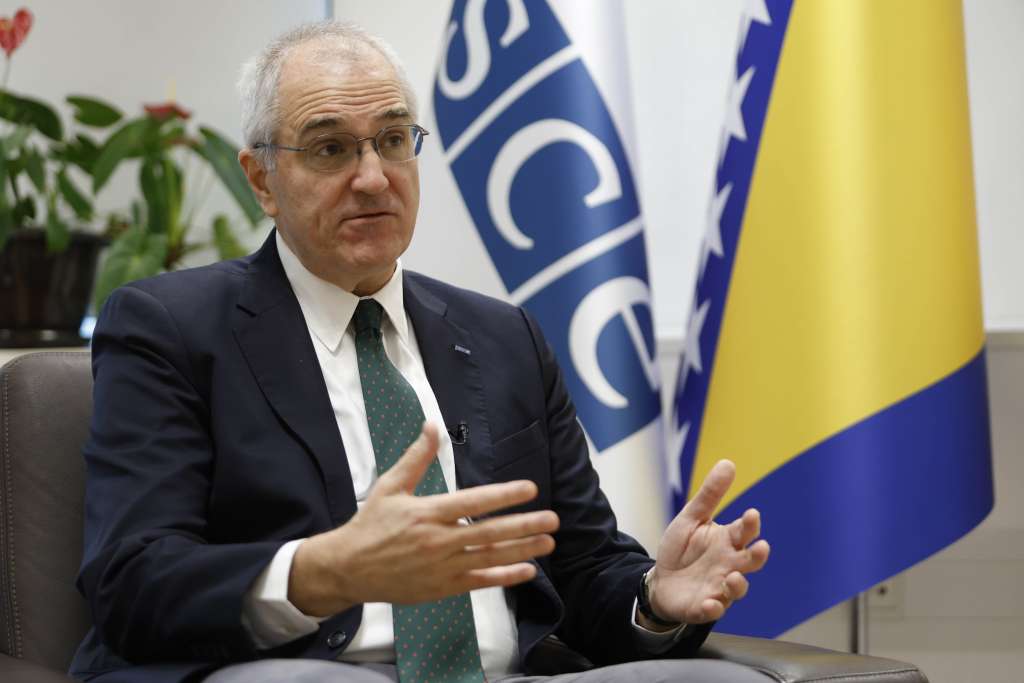
SARAJEVO, May 7 (FENA) - Head of the OSCE Mission to Bosnia and Herzegovina, Ambassador Rick Holtzapple, warned that violence against women in politics directly undermines democracy and citizens' trust in institutions, stressing that political parties must take greater responsibility in ensuring the equal and safe participation of women in political life.
Ahead of the 2026 elections, the OSCE Mission to Bosnia and Herzegovina is undertaking many key initiatives that aim at strengthening the integrity and transparency of the elections and supporting the work of the CEC. The Mission also remains one of the key supporters of the right of women to run for elections and implements a number of programs aimed at enhancing the role of women in political life.
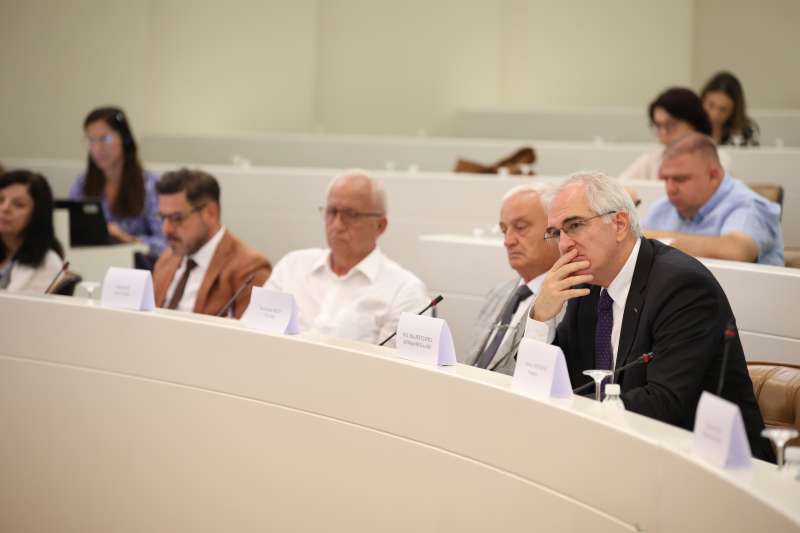
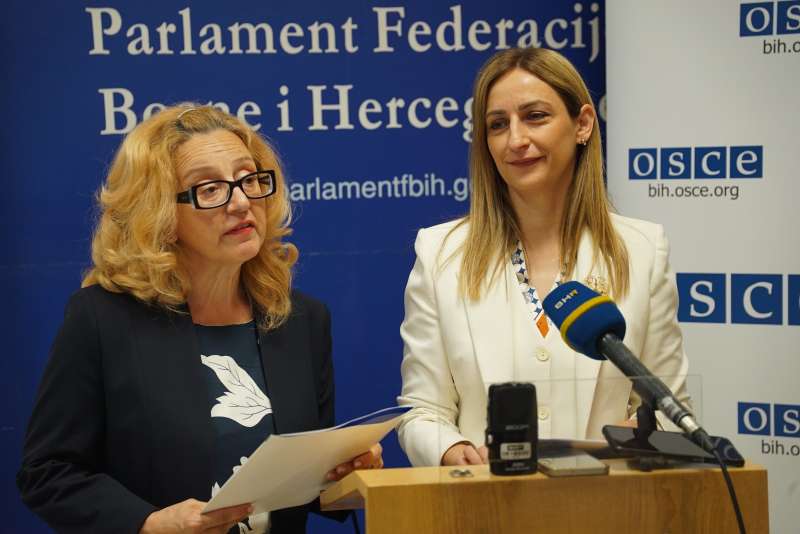
As part of these efforts, the Mission convened a meeting with women politicians from across the political spectrum on 7 May 2026 in Sarajevo, on the day of the calling of the 2026 General Elections.
The meeting aimed to reaffirm political commitment to the Principles for Political Engagement for the Elimination of Violence against Women, to reinforce support for priority measures including legislative changes to improve the institutional efficiency in response to violence against women, to provide a structured platform for women politicians, including young women, to articulate key messages and concerns ahead of the 2026 electoral cycle.
The meeting focused on the role of political parties in ensuring zero tolerance for violence, advancing equality of men and women, and supporting meaningful women’s participation in decision-making. It also addressed key legislative and institutional measures, with particular attention to barriers faced by young women in politics.
This was the reason for the interview with the Head of the OSCE Mission to BiH, Ambassador Rick Holtzapple, who spoke about the challenges ahead of the elections, the slow progress in women's representation, the need for urgent reforms, and the importance of introducing election technologies to strengthen the integrity of the electoral process in BiH.
Speaking about the purpose of today’s meeting, he said they had met on the very day the 2026 elections were officially announced, which gives this discussion both urgency and strategic importance.
''It is a key moment to ensure that women’s voices, experiences, and priorities are reflected in the electoral process and broader political decision-making. The goal is to create a constructive space for dialogue that transcends party lines, focusing on shared challenges such as violence against women in politics and barriers to participation. Ultimately, we aim to strengthen political commitment and identify practical steps forward,'' said Holtzapple.
Asked why violence against women in politics is such a critical issue and what role political parties play, he said that violence against women in politics directly undermines democratic integrity.
''When women face intimidation, harassment, or exclusion, it limits their participation and weakens public trust in institutions. This is not just a gender issue, it is a governance and democracy issue. Political parties are central actors. They shape who enters politics and under what conditions. Their internal rules, leadership practices, and public messaging can either enable safe participation or reinforce harmful barriers. That is why their commitment is essential,'' said the Ambassador.
Commenting on the significance of the Principles of Political Engagement and the progress achieved on this issue, he recalled that these principles provide a practical framework for political parties to commit to zero tolerance for violence against women and to translate political will into concrete actions.
''The Principles provide a practical framework for political parties to commit to zero tolerance for violence against women and to translate political will into concrete actions, such as internal reforms, awareness-raising, and accountability mechanisms. Some parties have already taken steps, including training initiatives and public commitments. However, broader adoption and consistent follow-up are still needed, particularly ahead of the elections,'' the Head of the OSCE Mission in BiH said.
He assessed the legal framework for women’s participation in politics in BiH as formally robust, noting that it guarantees gender equality in political participation. In addition, he said that the constitutional provisions of both entities, together with the Election Law and the Gender Equality Law, clearly prohibit discrimination based on gender and guarantee equal political rights, including the right to vote and to stand for election.
''However, while these provisions establish a solid normative foundation, they do not sufficiently address structural and party-level barriers that shape candidate selection and electoral competitiveness. As a result, the framework ensures formal equality but falls short of delivering substantive equality in political representation,'' he stressed.
The Ambassador also addressed key legislative priorities on ending violence against women and the question of how political actors can contribute to this effort, assessing that progress in addressing these issues has been uneven across the country.
''We need renewed momentum, particularly in Republika Srpska, where processes have been stalled, and in the Federation of BiH, where implementation requires adoption of all bylaws as required under the new Law. Development of comprehensive legal frameworks and adequate funding remain key requirements in ensuring a functional protection system. Parliamentarians can play a crucial role by advocating for these within their parties, supporting the adoption of legislation aligned with international standards, and pushing for professional and structured approaches to ensuring institutional responses to violence. Cross-party co-operation is especially important,'' he stated.
Speaking about the main differences between formal rights and actual representation, Holtzapple emphasized that the key gap lies in the distinction between formal access and viability.
''Women formally have the right to run for office, but are less frequently placed in competitive positions. For example, during the 2024 local elections, only 29 out of 385 candidates for mayoral positions were women. This indicates that political parties do not systematically promote women for executive roles. Instead, women are often nominated in politically less favorable constituencies, which limits their chances of success. Similarly, in the 2022 general elections, women led only 22% of candidate lists. Since list leadership is strongly correlated with electoral success, this underrepresentation translates directly into lower election outcomes. Consequently, women made up only around a quarter of elected officials across levels of government,'' said the Ambassador.
Asked what kind of barriers women, especially young women, face in politics and what needs to change, the Ambassador said that women face structural barriers, as well as harassment in both online and offline spaces, disinformation, and discrimination.
''Young women are often particularly targeted and may lack the support networks needed to navigate political environments. Political parties can make a significant difference by providing practical campaign support, establishing effective internal mechanisms to prevent and respond to harassment, actively recruiting women candidates, and promoting inclusive leadership practices. Media also plays an important role, fair and balanced coverage can strengthen women’s visibility and credibility,'' he said.
The Ambassador also recalled the results of the most recent elections in terms of women’s representation, emphasizing that they reflect a persistent structural imbalance. In that context, he noted that following the 2022 General Elections, women held 19 percent of seats in the Parliamentary Assembly of BiH, 28 percent in the Parliament of the Federation of BiH, and 25 percent in the National Assembly of Republika Srpska.
''Only one woman was elected to a position as Cantonal Prime Minister. At the local level, following the 2024 elections, only four women were initially elected as mayors, later increasing to eight due to post-election developments. These figures highlight that some improvements exist, but progress remains slow and inconsistent,'' he emphasized.
When it comes to violence against women, he cited findings from an OSCE survey according to which nearly every second woman has experienced some form of violence since the age of 15. He also stated that one in three women has experienced sexual harassment, of which only 2.6 percent was reported to the police.
''Unfortunately, 84% of cases of violence against women go unreported. Femicide data, while inconsistent, indicate an increase from 16 cases from 2021–2022 to 35 cases in 2023–2024,'' he said and reminded that half of those cases were committed by current or former partners (BiH AGE, 2025).
He added that the European Commission in Bosnia and Herzegovina Report for 2025 confirmed that the share of domestic and gender-based violence in overall crime is rising, making it one of the most frequently reported crimes in the country.
Asked what results he expects from today’s meeting and what the OSCE’s role will be in the coming period, he said he hopes to see renewed and tangible political commitment, both in endorsing the Principles and in advancing legislative and institutional measures to address violence against women.
''Inclusive and violence-free political participation is essential for credible elections. The OSCE Mission to BiH will continue supporting political actors through technical assistance, capacity-building, and advocacy. We will also help convey the key messages from this discussion to party leadership to encourage concrete follow-up actions. In the broader context of elections, we have witnessed public procurement processes for electoral technology frequently being stalled by appeals and political blockades within the Council of Ministers,'' said Holtzapple.
In an interview with FENA, he also addressed the issue of deliberate sabotage of the digitalization process through tender procedures to preserve room for manipulation on the ground, and explained how the OSCE would respond if the equipment is not procured and tested on time.
''In all other OSCE participating states where election technologies of different sorts have been successfully implemented, election management bodies have been strongly supported by various state institutions. So it is regrettable and concerning that in BiH responsibility for implementation of election technologies has been perceived as the sole responsibility of the Central Election Commission of BiH. I believe the Central Election Commission has taken important and appropriate steps to prioritize quality, reliability, professional standards and international experience, rather than political or business connections, in this vital procurement process,'' he stressed.
He also expressed belief that this effort to introduce new technologies is crucial for strengthening the transparency, integrity and credibility of the electoral process.
''Elections are the foundation of a democratic process, and it is crucial that all segments of their organization are entrusted to experienced entities that can guarantee the highest standards of technical correctness, security and impartiality. Selecting the highest quality company contributes to strengthening citizens’ trust in the electoral system, reduces the risk of technical irregularities and potential abuses, and ensures that the election results accurately reflect the will of the voters,'' said Ambassador Holtzapple.
He called on all relevant stakeholders to support this approach and to jointly contribute to improving the electoral process in Bosnia and Herzegovina and to make all relevant decisions that will enable the timely implementation of electoral technologies in the 2026 General Elections.
''The Mission will provide technical assistance, share international experience, and promote confidence-building measures, while fully respecting that ownership and control of electoral process must remain with the responsible levant institutions of Bosnia and Herzegovina.
He concluded that inclusive and violence-free political participation is essential for credible elections.
''Ensuring that women can engage fully and safely is not optional, it is fundamental to democracy,'' stated Ambassador Holtzapple.
(FENA) A. B.